The Book of Giants Explained: The Nephilim's Dreams of the Flood
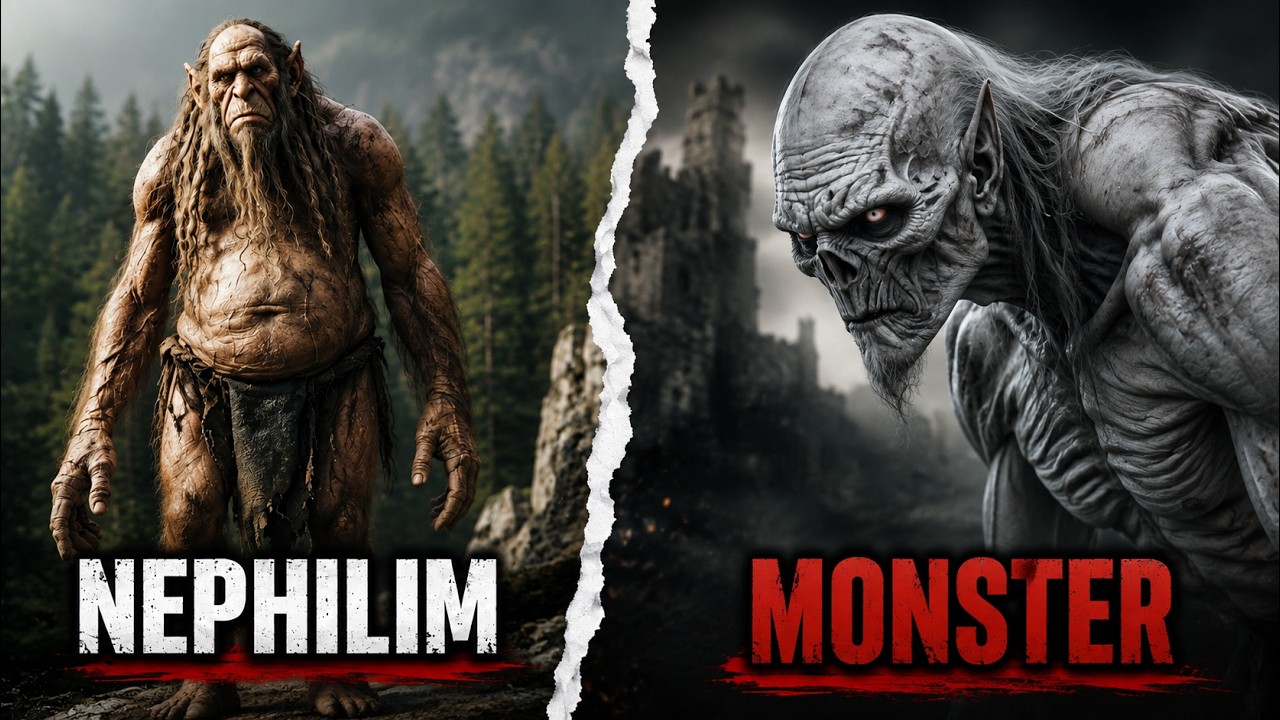
Genesis gives the Nephilim a single verse. "There were giants on the earth in those days" (Genesis 6:4), and then the story moves straight on to Noah. The Book of Enoch says far more, but it tells everything from heaven's side: the angels fall, the giants destroy, and God judges.
There is one more ancient text, and it does something neither of those does. It lets the giants speak. It is called the Book of Giants, and in it the Nephilim find out that a flood is coming and that they are not going to survive it. Our video retells that story from start to finish. Here I want to explain what the book is, what happens in it, and how much weight I think it can carry.
What is the Book of Giants?
The book was found in the caves at Qumran, among the Dead Sea Scrolls. It is written in Aramaic and it survives only in fragments. Some pieces hold a few lines, many hold a few words, and nobody is completely sure what order they go in. Scholars already knew a Book of Giants had existed, because the followers of the prophet Mani used a version of it centuries later. Qumran showed that the Jewish original was much older than that.
Because the scroll is so broken, every full telling of the story involves some rebuilding. Our video is open about this. It is a modern retelling that joins the fragments into one narrative, so please take it as a reconstruction and not a word for word translation.
A world that could not feed its giants
The setting is the same one the Book of Enoch describes. Two hundred angels, the Watchers, came down in the days of Jared (1 Enoch 6). They taught people to forge weapons and to practise sorcery, they took human wives, and their children were the giants.
The detail I always notice is the hunger. The giants ate everything people could grow, and it was never enough. 1 Enoch 7 says that when the food ran out, they turned on the people who had been feeding them. Before the flood ever arrives, the earth in this story is already being eaten alive.
The creatures nobody asked for
One fragment contains a strange list: animals taken two hundred at a time, donkeys, rams, goats and others, with a broken line about mixing kinds. The retelling fills in that gap with hybrid creatures, monsters that are alive and aware but lack real understanding, and it places them beside the giants.
How literally should we take that? Honestly, the fragment is too damaged to say. What it does show is how the writers thought about sin. For them the Watchers did not only break a rule. They damaged creation itself, and the damage spread to animals, to the soil and to people.
The dream that frightened a giant
Then the tone changes. A giant named Mahway starts having nightmares in which all life is wiped out, apart from one man and his sons. Other giants are dreaming too. They call an assembly, and for the first time these creatures are afraid.
One of them, Ohyah, tries to wave it away. The judgment must be meant for Azazel, he says, because Azazel is the one who taught humanity its corruption. Surely their angel fathers will not abandon them. And if it comes to a fight, they are strong.
Then comes the name that surprises every first-time reader: Gilgamesh. Yes, the hero of the famous Mesopotamian epic appears in the Dead Sea Scrolls as one of the giants. In the retelling he is the one who says what the others will not. He has beaten every human army he ever faced, and he knows he cannot beat heaven.
Enoch's tablet
So the giants send Mahway to find Enoch, the scribe, to ask what the dreams mean. Enoch answers with a written tablet addressed to Shemihazah, the leader of the Watchers, and to all his companions. The message is short. The earth is crying out because of what they and their children have done. A flood is coming, and it will destroy every living thing.
The surviving text adds one more instruction, and it is the line I find hardest to forget. The giants are told to pray.
Why this story stays with me
I expected the Book of Giants to be a monster story. In practice it reads more like a story about a guilty conscience. Mahway worries about the spirits of the people he killed and asks what will happen to the giants when they die. Those are human questions, and the author puts them in the mouths of the most feared creatures in the ancient world.
We do not know how the giants answered, because the scroll breaks off. Genesis tells us the flood came. Whether any of them prayed is lost with the missing pieces, and I think the unfinished ending is part of why the book stays in the mind.
Should Christians read it?
The Book of Giants is not Scripture, and no church treats it as part of the Bible. I read it the way I would read an ancient commentary. It shows how Jewish readers, before the time of Jesus, understood Genesis 6. The New Testament knows the same tradition: Jude 6 and 2 Peter 2:4 both speak of angels who sinned and are being kept for judgment. Reading the book will not add anything to your Bible. It can help you see why that one short verse in Genesis troubled people so deeply.
Conclusion
The Book of Giants takes the villains of the flood story and gives them a warning, a dream and a chance to pray. That is an unusual thing for an ancient writer to do, and it says a lot about how seriously those writers took both judgment and mercy. Watch the full retelling below, then tell us in the comments: do you think the giants could have been forgiven?


Comments
Post a Comment