Life Before the Flood: The Lost World From Adam to Noah
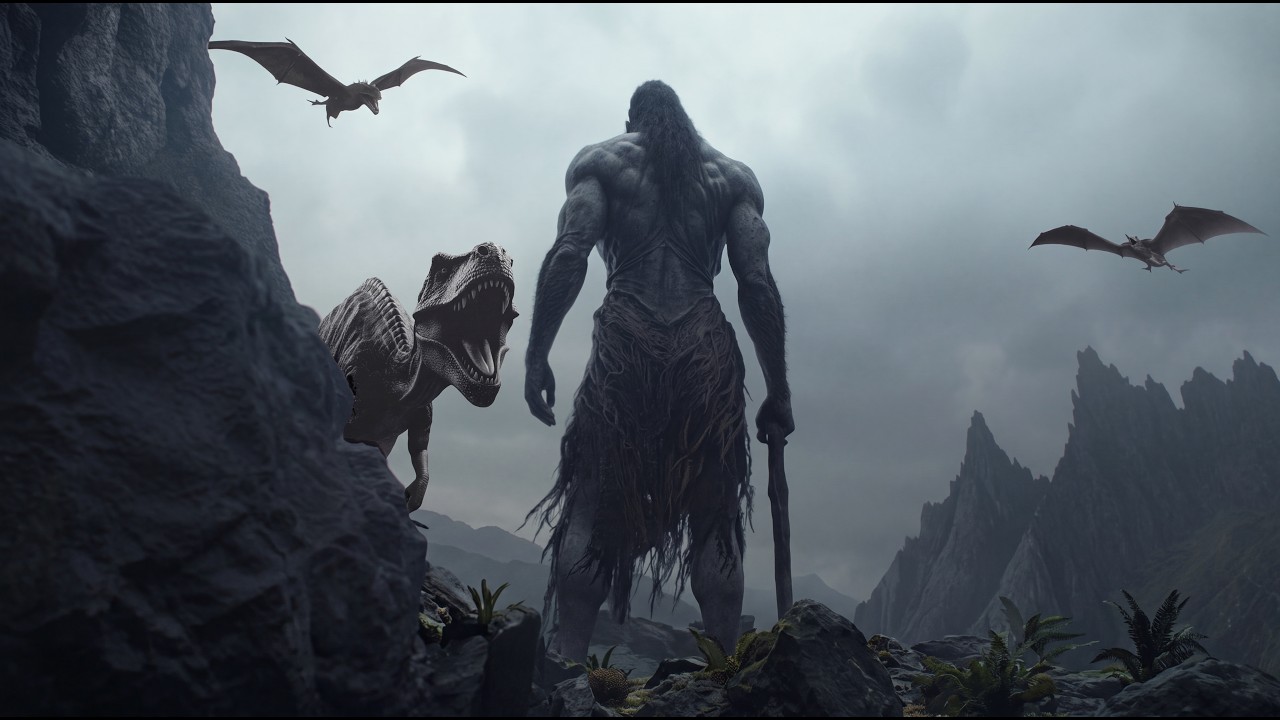
Genesis covers more than sixteen centuries between Eden and the Flood in just a few chapters. Whole generations get a single verse. So what was that world actually like?
Scripture gives us the frame. Older traditions, like the Cave of Treasures and the Book of Enoch, try to paint in the rest. Put them side by side and you get a story about two families, one mountain and a slow slide into ruin. I will mark which parts are Bible and which are tradition as we go.
After Eden
It starts in a garden God planted Himself. Adam had work to do there. He kept the garden, and it fed him and Eve with everything they wanted. The animals were nothing to be afraid of.
Then came the serpent, and the gate closed behind them.
According to tradition, Adam and Eve settled on a mountain near the garden and made their home in a cave they called the Cave of Treasures. There Eve bore Cain and Abel. You know what happened next. After Cain killed his brother he left for the land of Nod, a name that means wandering, and built what Genesis calls the first city (Genesis 4:16-17). Adam and Eve had another son, Seth, and from that point the human family was split in two.
The mountain and the plain
Seth's people stayed on the holy mountain with Adam. Cain's people lived below, in the east.
When Adam was dying at 930 years old (Genesis 5:5), tradition says he made Seth promise two things: to bury him in the Cave of Treasures, and to keep his children apart from the children of Cain.
For a long time they did. The old accounts describe Seth's people living close enough to paradise to hear the angels singing, and it shaped them. There was no envy among them, no anger. When they swore an oath, they swore it by the blood of Abel.
The warning was handed down like an heirloom. Seth gave it to Enosh. Enosh gave it to Kenan. Kenan gave it to Mahalalel, and Mahalalel to Jared. Every father said the same thing on his deathbed: do not go down.
The day they went down
It broke in Jared's time. Down in the plain, Cain's descendants had filled their cities with idols of brass and with every kind of immorality, done without shame. Tradition says Satan himself had become the prince of that camp. And they had music. Reeds, harps and tambourines, and laughter so loud it carried up the mountain.
About a hundred of Seth's sons heard it and wanted to see for themselves.
Jared begged them. He made them swear by the blood of Abel and warned that whoever went down would never climb back. They went anyway. They saw the daughters of Cain, and that was the end of it. Later, when some tried to go home, the story says the stones of the mountain burned like fire under their feet. There was no way back up.
That detail has always stayed with me. Nobody dragged them down. They were curious about the noise.
Then the Watchers came
Genesis 6 says the sons of God saw that the daughters of men were beautiful and took wives from among them. The Book of Enoch tells that part at length.
Two hundred angels came down on Mount Hermon in the days of Jared. Their leader, Samyaza, was afraid the others would back out and leave him to carry the guilt alone, so they bound themselves with an oath (1 Enoch 6). Each took a wife. The children born to them were giants. Enoch gives their height as three thousand ells, a number you will not find in Genesis. They ate everything people could grow, and when that ran out they turned on the people.
The angels also taught. Azazel showed men how to make swords, knives, shields and breastplates, and how to work metal, and he taught the arts of jewellery and painting the eyes. Samyaza taught enchantments. Baraqijal taught astrology, Kokabel the constellations, Shamsiel the signs of the sun, Sariel the course of the moon (1 Enoch 8).
Read that list again. Weapons, vanity and fortune telling. It is knowledge, but look at what it was used for.
Enoch, and a strange child
As people died, their cry went up to heaven. Enoch, the seventh from Adam, was sent to announce the verdict on the Watchers: no forgiveness, and chains in the depths of the earth.
Then Enoch's grandson Lamech had a son, and the baby frightened him. His body was white as snow, his hair white as wool, and his eyes lit up the house (1 Enoch 106). That child was Noah.
The Flood
From here we are back on the solid ground of Genesis. Noah was righteous and blameless in his generation, but the earth was corrupt and full of violence (Genesis 6:9-11). God told him to build an ark of wood, seal it with pitch, and bring in two of every living creature. Noah did all of it.
The springs of the great deep burst open and the windows of heaven with them. It rained forty days and forty nights. Everything on dry land that breathed, died. When the water finally fell, the ark settled on the mountains of Ararat, and Noah walked out, built an altar and worshipped.
God answered with a promise and a sign. Never again a flood to destroy all life, and a rainbow in the clouds to mark the covenant (Genesis 9:13).
What I take from it
I would not build doctrine on the Cave of Treasures or on Enoch. But they are asking the right question: how does a world get so bad that God starts over?
Their answer is not one great crime. It is a promise kept for five generations and dropped in the sixth, because the music sounded good from far away.


Comments
Post a Comment